Showing posts with label dog behavior. Show all posts

Sunday, March 26, 2017

Puppies and Pointing


Why are some dogs better at paying attention to humans, particularly human gestures like pointing, than others? We know genetics has something to do with it, because some breeds (like border collies) are a lot better at responding to human signals than others like beagles. To better understand the biology driving differences in ability to respond to human signals, researchers at the Family Dog Project compared dogs and wolves as they grew up. They knew that wolves can respond to human signals, but that they are better at this when they have been extensively socialized, whereas dogs can understand human signals with much less socialization. But at what age do these differences manifest?

Family Dog Project
Image from the Family Dog Project

The researchers used a pointing test to measure ability to respond to human signals. This test has been used on dogs before: if a dog is given a choice of two bowls, only one of which contains food, and he can't see where the food is, will he follow a person's pointing gesture to pick the right bowl? (The bowl with no food in it is rubbed with food so the dogs can't use their noses to get the right answer.) This test has been done in the past with dogs versus human children (dogs do about the same as two year old kids on this task), dogs versus wolves (dogs generally outperform wolves, unless the wolves have a whole lot of experience with humans), and dogs versus chimpanzees, our closest primate relatives (dogs outperform chimps!).

For this study, the researchers compared hand-reared (i.e., well socialized) 8-week old dog and wolf puppies; 4 month old dog and wolf puppies; and adult dogs and wolves. They tested the animals' abilities both with "proximal" pointing (putting their finger right up to the bowl) and "distal" pointing (standing farther away and indicating the bowl) - except that, since very young puppies and wolves don't see well, they didn't test the distal pointing in the 8 week old babies. What they found:
  • The 8 week old puppies (dogs and wolves) had similar ability to follow the proximal pointing gesture with the researcher's finger right next to the bowl. However, 6 of the 13 wolf puppies tested had to be removed from the trial because they couldn't be held on the start line or didn't go choose a bowl. Of the 9 puppies, only one was removed for similar reasons.
  • 4 month old dogs did better at distal pointing (with the researcher standing away from the bowl and indicating it) than 4 month old wolves did. In fact, the 4 month old wolves seemed to do no better than chance.
  • Adult dogs and wolves did equally well with both proximal and distal pointing.
  • At all three ages, wolves needed more time to establish eye contact with the pointing human than dogs did.
So all the animals at all ages were able to understand a pointing gesture when the human put their hand right up to the bowl. But pointing from farther away was harder, as you'd expect. Very young puppies (dog and wolf) were not tested on that task. At four months, wolves hadn't figured it out yet, but dogs had. As adults, the wolves had caught up. These were highly socialized adult wolves with a great deal of experience with humans.

It's interesting that dogs seem to develop the ability to understand a more difficult human pointing gesture at a younger age than wolves - and particularly interesting that this may have to do with the fact that wolves are not as eager to look us in the eye as dogs are. (If you don't look at someone, it's hard to follow their pointing gesture!)

So what does this mean for differences in different dog breeds? Do different dog breeds have differences in the timing of their cognitive development? Does this affect how much attention they pay to us, and perhaps how easy they are to train? We don't know, but I think this is one direction dog research needs to go.

(By the way, check out the original paper - it's open access, and has some great videos of dog and wolf puppies at the end!)

Gácsi, Márta, et al. "Explaining dog wolf differences in utilizing human pointing gestures: selection for synergistic shifts in the development of some social skills." PLoS One 4.8 (2009): e6584.

This post was originally published with slight modifications at Darwin's Dogs.

Thursday, October 13, 2016

The Replacement Dog: how a veterinarian / dog rescuer / geneticist searched for the right puppy

The death of my fifteen year old golden retriever Jack wasn’t just about my loss. It was about finding someone else to do his job, which for the last five years had been serving as a security blanket for Jenny, my shy collie mix. Jenny depended on him to tell her when people did not intend to eat her, to run interference with well-meaning strangers, and to demonstrate calm at the veterinary clinic. We could not remain a single dog household for long.
Jack and Jenny
I adopted Jenny at age 13 months. She had never been off the farm where she was born until her surrender to a shelter, and the world proved much larger than she expected. Jenny has excellent dog skills but a crippling anxiety upon encountering new people or environments. I adopted her knowing about her idiosyncrasies because I wanted to study anxiety in dogs, and wanted to experience it first hand. And so I have; living with Jenny has informed my understanding of anxiety in a way that reading about it never could have.

In my research, studying the way genetics and environment interact to affect the risk of anxiety has brought me back time and again to the importance of early environment: in utero environment, early maternal care, and puppy socialization. How the brain changes during and after the socialization period turns out to be a huge part of my research interests, and to learn from the source as I had done with Jenny, I would need a puppy, and a very young one at that. I’ve only adopted adult dogs in the past, but now is an excellent time for me to raise a puppy, as I work from home many days.

A puppy who would grow up to fit in well with Jenny had to fit a specific mold: confident around people and other dogs, but not so pushy as to annoy her. Someone she could play with. Someone male, because I didn’t want to deal with girl dog politics for the next ten years.

Jenny
Now, I have counseled others that adopting a very young mixed breed puppy from a shelter or rescue group means you really have no idea at all who you have just brought home, and that there is no shame in purchasing a dog from a responsible breeder. However, in practice, I balked at purchasing a dog. I completed an intense shelter medicine internship at the University of Florida several years ago, and I still feel part of that community. As the distance between the present day and that experience increases, I find myself holding tighter to those connections and looking for new ways to remain a part of sheltering. Purchasing a dog who was not going to be in want of a home felt a bit like eating humanely raised meat: I tell myself it’s okay for others to do it, but when I actually try to do it myself, some part of me rebels.

Yet as I looked at puppies from local rescue groups, in short order I found myself in a panic: could I really adopt a puppy whose genetics were completely unknown, whose parents I most likely couldn’t meet, and who had almost certainly had some early life trauma before ending up in foster care? Genetics and early experience are both critical in shaping the adult personality, and while I hope I could handle dealing with another shy dog, Jenny needed someone dependable, not another neurotic failing to keep it together when the mailman drove past.

When I started to seriously consider purchasing a dog, I had to decide on a breed. I love retriever-collie mixes: ideally the best of both worlds, retriever-social and collie-smart. But finding a responsible breeder of retriever-collie mixes seemed a tall order. Border collies are too intense for me. Australian shepherds have their tails docked so short. And I wanted to find a breed that is not recognized by the AKC, that is absolutely not bred for looks, that possibly even has open stud books to keep the genetics pool large and diverse.

I found the Scotch Collie and the English Shepherd. The Scotch Collie club had an open stud book policy going for it (good for them!). The English Shepherd club had a closed stud book policy (open it up, guys!) but it had been open relatively recently, the breed isn’t recognized by the AKC, and the dogs can’t be shown in conformation classes. The breed is a versatile working breed. Both breeds have lovely breed standards that accept a wide range of phenotypes (for example, 30-80 lbs in adult weight - a wide range!), which in itself tells the story of breeding for temperament and not looks.

In the end, I chose the English Shepherd based on the fact that there are more of them around, so it was easier to find a litter promptly. Waiting a few months would mean potty training a puppy in January in the Midwest, an experience I’ll leave to others.

The English Shepherd club maintained a list of breeders who had available puppies, with lots of information about the parents. It’s a well designed resource, and I link to it not to encourage others to run out and get an ES puppy (they are smart and high energy and not for everyone) but to provide an example of what kinds of information should be provided about available litters.

I screened the descriptions of parents: I discarded those who weighed more than 70 lbs, as managing Jack in his dotage had been hard on my back. I discarded those who were described as protective or taking some time to warm up to people. I checked that the parents had passed the relevant genetic tests (for this breed, tests for several eye diseases and hip dysplasia). Then I looked at the remaining breeders’ websites.

The breeders I liked talked about how they raised the puppies: giving them lots of positive experiences. They talked about what they did with the puppies’ parents - agility, nosework, herding. They often had long applications for potential owners to fill out, which asked all the questions they should: How will you exercise this dog? Do you have a fenced yard? What will you do if he is destructive?

I found a litter in Virginia with a male who sounded perfect: confident, social, and by the way athletic. My husband and I stuffed Jenny into the car and drove 9.5 hours to pick up our boy. He cost, by the way, probably more than twice what a rescue puppy would have cost, but I have paid for knowing that he is clear of some genetic diseases for which he might have been at risk, and for knowing that he was in the uterus of a calm, happy mother; raised with a litter who had plenty of high quality food and safe places; and had extensive early socialization (including the Early Neurological Stimulation and Early Scent Stimulation programs). He has proven, in his first week and a half with us, to be social and sweet, willing to settle down when asked so long as he is given plenty of exercise and mental stimulation, and terrifyingly smart. He and Jenny are already wrestling for hours daily, laying the foundation for what I trust will be a long friendship.

That is the story of how we found Dashiell.

Dashiell


Thursday, May 5, 2016

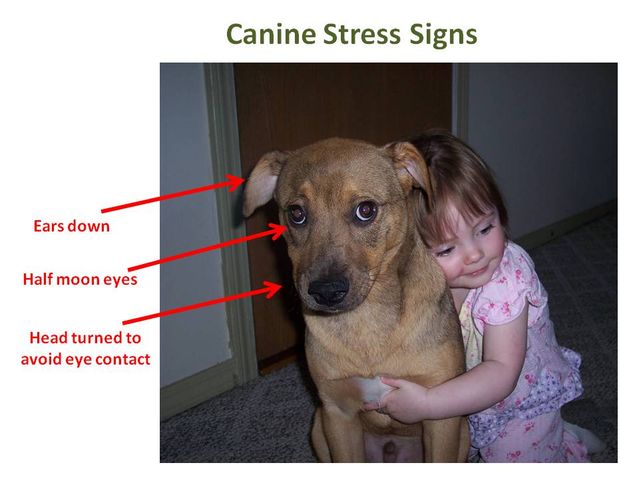
Dogs and hugs FAQ

Stanley Coren, well known and respected author on dog cognition, recently published a blog post about dogs not enjoying hugs. Now that I have been asked to weigh in on his post by my father ("that can't be true!"), my lab mate ("Jessica will have some useful insights about this!"), and multiple dog park friends, I feel compelled to spread my wisdom across the internet for the benefit of all, whether they want it or not.

Source: The Data Says "Don't Hug the Dog!", Stanley Coren, Psychology Today


  1. Does your dog enjoy being petted by you? Almost certainly.
  2. Does your dog enjoy being grabbed and squeezed? Probably not.
  3. Do any dogs enjoy being grabbed and squeezed? I am sure there are some. I know some dogs who enjoy all interactions with humans up to and including getting whacked up side the head (I live with one). But as a species generalization, I believe they mostly don't.
  4. Should you hug random dogs when you meet them? Absolutely not. But you knew that already, right?
  5. Should you hug your own dog? Sure. I do it to my dogs sometimes. Just be aware that you are doing it for your own enjoyment, not theirs. My dogs tolerate the occasional squoze. I tolerate being punched in the butt when I get home from work.
  6. How can it be that dogs, who love us so much, don't enjoy hugs, which we enjoy so much? Well, note that primates really love pressing our tummies against each other, but canids don't (except when they are initiating sex or displaying poor manners). They display affection other ways: licking you in the face, sitting next to you, leaning on you. With someone who moves at the same pace they do, you sometimes see them walking or running shoulder to shoulder. I would love to hear from people about what they think their dogs do instead of hugging.
  7. Was Coren's study a good study? It wasn't actually a study, and Coren didn't say it was; in his blog post, he refers to it as data. This data set was pretty interesting and it was nice of him to share it with us. It would be even nicer if someone did a study using similar approaches, but with a control group, maybe having the person scoring the dog body language blinded to the group the dog is in (editing out the human so you can't see the hug?), and published it in a peer reviewed journal. Oh, and while I'm asking, make it an open access journal, please.
  8. Where can I learn more about dogs and hugs? In my mind the best resource is Dr. Patricia McConnell's coverage in her classic book, The Other End of the Leash. Which is a must-read for oh so many reasons.

Sunday, January 24, 2016

Dog parks: tools to be used for good or evil

Dog parks can be valuable ways to exercise and socialize your dog. They can also be dangerous places where dogs can get hurt. And so we ask ourselves: are dog parks a good thing or a bad thing? I argue that they are neither. Like retractable leashes, they are just a tool that can be used well or badly.

Park design

The design of a dog park can have a lot to do with how well it functions. I think the size of the park is incredibly important. At my local park, we have a lot of space. And I use this space with my dogs. If there is a group of dogs that my dogs aren’t getting along well with, and I see trouble brewing, I move on to a different part of the park. In a small park, this wouldn't be possible.

Jenny at my fabulous local park

My local park also has a smaller area, separately fenced. It’s a great place to take a smaller dog when the park is full of big dogs, or to take a dog who needs a cooling down period after he's been acting like a bully. I don’t use this space much with my dogs, but it’s extremely helpful for a friend of mine who’s trying to teach her six month old to restrain his enthusiasm around other dogs by giving him time outs when he fails to control himself appropriately.

Park timing

I don’t go to the park when it’s crowded. Of course, it’s crowded at the times that are the most convenient for the most people: late afternoon, weekends, when the weather is lovely. I go in the mornings during the week. I lead a lifestyle which makes that possible (though I have to push back at work to protect that time). If you can only go to the park when it’s crowded, it might not be worth going at all. Tempers run high when dogs are packed in together with no real room to get away.

Dog management

This is the important one for me: I am always alert and managing my dogs. I keep an eye on them. One of them can have a short temper with other dogs, and I keep her moving, away from groups. If I see her meeting another dog, I am watching closely for her to get tense, and if I don't think it's going well, I call her away before something goes wrong.

This kind of management is hard for a lot of owners who don’t understand dog body language well. For this reason, I’ve founded a group at my local park with the goal of (among other things) providing educational material at the park to help owners understand how to identify and avoid problems before they start. Not everyone will be interested in this material, and that’s why it’s also important to me to attend a large park during low occupancy times.

Stuff happens

My dogs have been attacked at the park. One of my dogs has also been attacked while I was walking him on leash on a sidewalk. And once he got away from me and was almost hit by a car. That’s life. Is it more dangerous at the park than on a leash on the sidewalk? Possibly, though I’d love to see evidence one way or the other. Is it more dangerous to a young dog to fail to get his crazies out on leash, and then be at risk of being surrendered by a frustrated owner? Again, I can’t say, but there are risks to any choices about how we manage our dogs.

At the park, there are no cars, no cats, no children, no bicycles, no terrifying joggers just begging to be bitten. One of my park friends walked her dog on leash until he bit a roller blader who passed too close. Without the park, she would be unable to exercise her dog safely. My shy dog Jenny has made canine and human friends at the park that she is unable to make in situations in which she's restrained. She has made incredible gains in confidence. That has come at a risk, but to me, with a lot of careful management of the dog park environment, at the right park, with these dogs, it’s worth it.

Saturday, November 22, 2014

Testing behavioral assessment

My Bark article, Testing the Tests, is now available on the web for free. I did a lot of background reading for this story and I learned a lot of interesting stuff about shelter behavioral assessments: how they're designed, how to evaluate whether they work, and new work that's going into improving them. Check it out!

Wednesday, March 14, 2012

Humpity humpity

I am staying in a rented room near the aquarium where I’m doing an externship this week, and my hostess’ dog likes to hump me. I’m trying to suss out all the intricacies of his reasoning.

Humping is generally seen as a dominance behavior in dogs: one dog does it to another dog to assert his dominance. (If he is mistaken, a fight might break out.) This dog is probably trying to assert his dominance over me. But my hostess tells me he has never tried to hump any other guests. Why not? (Maybe he felt secure in his relationship with them and didn’t have to try to prove himself. He’s a big dog and it’s possible they were scared of him.)

But she adds that he does try to hump her neighbor, a little old lady. So if he likes to hump people that he feels insecure about, why her? And, alarmingly, does he think I am as much of a pushover as a little old lady?

Dogs are weird. It’s always a little frustrating when I can’t quite suss one out: “why did I spend so much money on vet school if I still don’t know everything?”

Sunday, July 18, 2010

Seeing it their way

This weekend, I attended a seminar with Patricia McConnell, Ph.D., CAAB. The “CAAB” after her name means that Dr. McConnell is a behavior specialist who works clinically with dogs who have behavior problems. (The difference between a behaviorist with a Ph.D. and one with a D.V.M. is sort of like the difference between a psychologist with a Ph.D. and a psychiatrist with an M.D.) She is a great public speaker, and if you are interested in this kind of thing and have a chance to go hear her, I highly recommend the experience.

Dr. McConnell spoke about why we have reason to believe that dogs have many emotions similar to ours. She showed some fascinating pictures and videos of canine body language and talked about how to interpret it. And she worked with two dogs, demonstrating both classical and operant conditioning as tools for helping fearful dogs become more comfortable.

One specific part of the day serves, for me, to illustrate some skills I’d particularly like to learn, and they weren’t dog training skills. McConnell showed the audience video recordings of a dog with a resource-guarding problem being trained using an aggressive dominance-based approach. Resource-guarding dogs don’t like to give up their possessions. My dog doesn’t much like to give up his toys either, but he never growls or tries to bite when I take them away, and that is the difference between a dog who has a resource guarding problem and one who does not. So the danger when you’re working (or just interacting) with a dog like this is that you might get bitten.

Now, this was an audience of dog people. We all knew a lot about dog body language (and had learned more over the course of the previous few hours). As we watched the video, we were all flinching repeatedly, anticipating that the dog was going to bite, based on his body language. The woman in the video clearly wasn’t seeing what we were seeing and did not perceive any danger, even putting her face next to the dog’s mouth several times (yikes).

There was a lot going on in this bit of the seminar. First of all, a lot of trainers and behaviorists would have taken the opportunity to mock the woman on the video for her lack of understanding of the situation. There is one dog trainer whose book and seminars I otherwise very much enjoy, but who seems unable to refrain from shaming the clients she works with when they appear to know less about dog training than she does. Instead, McConnell emphasized what a good job this woman had done. She did exactly the right thing: she took her dog to a trainer, and she followed the trainer’s instructions to the letter. She was the ideal client. It would be very easy for someone who knew more to get caught up in anger about how an inappropriate training method was making things worse for the dog. It is so important, and so difficult, to instead see things from the other person’s point of view, and this was a great example of doing just that.

Secondly, rather than just focusing on teaching us about dog body language (preaching to the choir), McConnell repeatedly pointed out specific ways in which the general public tends to miss some messages that dogs give us. It’s rewarding but not useful to just fine-tune the abilities all day of a group of people who are already self-selected to be pretty good dog trainers. It’s much more useful to help them learn to see what the problems are in the community of dogs and humans around them. Maybe if more dog trainers knew what information the public was missing about how to read their dogs, they would do a better job of instructing people who come to puppy class. (I am not bashing trainers! Lots of them do a spectacular job. But we can all do better, because too many people get bitten, even by their own dogs.)

McConnell’s well-known book, The Other End of the Leash, tries to help people see things from the point of view of their dogs. But she is also good at trying to help people see things from the point of view of other people, and that’s invaluable. Hmm. Where should I go to school to learn that skill?

(For more on McConnell, try her books, The Other End of the Leash or For the Love of a Dog, or read her blog. You can also download old episodes of her radio show, Calling All Pets, to listen to her demonstrate her lovely verbal judo, in which she is able to basically tell callers that they are completely mistaken, without in any way making them feel bad.)

Tuesday, June 8, 2010

Greeting dogs

After reading my assertion that children should learn the appropriate way to approach a strange dog, Nathan commented: It seems strange to put the responsibility there. Why is it OK for us to have creatures around that are dangerous to children who have not memorized this bit of trivia?

It is an excellent question, which I’d like to break down into several questions.

What is the purpose of learning how to approach a strange dog?

It could certainly be beneficial to the human to learn how to approach a strange dog. However, I originally posted a link to the lovely How Not to Greet a Dog comic with the benefit of the dog in mind. I’d like to see more people be aware that their approach to a strange dog can be stressful to the dog. Luckily, most of the time, the dog’s stress at an impolite approach doesn’t have consequences for the human (no one gets bitten or even growled at). But it does have consequences for the dog, who might feel some measure of alarm.

A few days ago, a child visited my dog in my back yard. She put her arms around him and hugged him while making high pitched noises. Jack looked away from her in alarm and licked his nose three times in rapid succession to signal his discomfort. Because he did not growl at her, however, I’m guessing that she assumed he enjoyed the interaction. Doesn’t everyone like to be hugged?

I think Jack felt somewhat as you might if a stranger bodyslammed you on the street. (Remember, canines don’t hug the way we do. Patricia McConnell has made the excellent point that if a dog is pressing its stomach against another dog, it is probably mounting the other dog in a dominance display.) The girl had a good time, but I’m guessing that was mostly because she was assuming Jack was enjoying the hug. Hopefully she’d actually prefer for the dog to have a good time, too.

Whose responsibility is it to prevent dog bites?

OK, but some dogs do bite, and Nathan’s question remains: whose responsibility is it to make sure that that doesn’t happen? The child’s?

In my opinion, it is absolutely not the child’s responsibility to ensure their safety around a strange dog. It is the responsibility of the owner of the dog. If the dog cannot be trusted to put up with a hug, or a high pitched squeal, or a hand waved in its face, then the dog should not be around the child.

But this is the real world. Sometimes children approach dogs when the owner is looking the other way. Sometimes the owner is irresponsible and is letting an untrustworthy dog be around a child inadvisedly. And sometimes the owner thinks the dog is trustworthy, for very good reasons, but the dog is having an extremely stressful day and the child’s behavior is the last straw. You never know. I would say that Jack is “extremely unlikely” to bite, because I have never seen him growl at a child, or try to escape from the vicinity of a child, or even show stress behaviors around a child (until the child does something over the top like hug him — but as soon as she stopped, he relaxed again). But you never know. Any dog can bite. If I were a parent, I’d want my child to have some tools for dealing with a potentially dangerous situation, just in case.

Why should I learn how to politely approach a dog?


I think it would be a good thing for people to learn how to interact with dogs — to learn what is polite in the dog world. We have to learn what is polite in interacting with each other. (Don’t run up to total strangers on the street and hug them, even if they are extremely attractive!) Dogs have to learn what is polite in interacting with us. (Don’t leap up on humans and lick them in the face! ...Some of them don’t learn this, and most of us would agree that this is a real failing on the part of their owners.) So why shouldn’t we also learn how to greet a dog? It seems only fair.

If you don’t like dogs, and don’t intend to be greeting any, then it’s less worth it for you to learn this skill. However, in this case, learning a little canine body language can be helpful for keeping them away from you, too. I once saw a man in a park who encouraged every dog he met to jump on him by crouching down in front of them and raising his hands in front of his body. He meant to prevent them from jumping on him. He should have turned his shoulder to them and avoided eye contact.

A lot of people who don’t own dogs do like them and like to be able to greet strange ones on the street. A lot of young people are in this category, from what I can tell from my experiences walking dogs. Some dogs are social butterflies and don’t much care how you greet them (my old roommate’s dog Casey definitely falls into this category), but some are very sensitive. I think it makes sense for people to learn the polite way to greet a dog — both for the dog’s comfort and, very occasionally, for the human’s safety.

What can I do?

  • If you’re the parent of a school-age child, support your child’s school in providing education about how to interact with animals. It’s useful.

  • Of course, read that comic if you haven’t yet. It’s cute.

  • Patricia McConnell’s book The Other End of the Leash is a great resource if you’re curious about learning more about how to see the world from the dog’s perspective.

  • If you don’t want to read a book about this but have some specific questions about how to interact with dogs that you want answered, where can you go? It occurs to me that our society doesn’t really have a great solution to this sort of problem. Maybe the blogosphere can step up. I’d be happy to answer any questions people have — Translator for Dogs would be a fun job for me to have some day. Hopefully dog trainers who maintain blogs (and there are plenty of them out there) would enjoy answering specific questions, too.

Wednesday, June 2, 2010

The assessment of emotional expression in dogs

“The assessment of emotional expression in dogs using a Free Choice Profiling methodology” (Walker et. al., Animal Welfare).

Do different people tend to have overlapping or at least complementary ways of describing dog behaviors? And if they do, can a computer put together a behavior scale out of those descriptions, even without any understanding of what’s actually being described? Put a different way: Can we describe a group of observations of dog behavior using a fancy statistical technique which is hard for Dog Zombies to understand? Our intrepid investigators put a bunch of college women together with some dog videos and applied a lot of statistical processing to find out.

The mammals


The people: eighteen undergraduate women with varying levels of familiarity with dogs, but all currently studying animal behavior. (At a guess, they were all students in a class taught by one of the investigators.)

The dogs: ten Beagles trained as customs dogs.

The setup: The 18 women sit in a movie theater. They watch video clips of the beagles. They write down words that come to mind as useful in describing the dogs.

At the end of this first session, they hand in their terms. They then are sat down again (it doesn’t say if they’re all together in the movie theater this time, but I imagine them at individual desks for some reason) with the list of terms that they had generated. Each person gets their own list; there’s no collation yet at this point. They watch some of the beagle videos again. (I sympathize. I have watched a lot of Dog TV lately.) They rate each dog against each term using a visual analog scale. That’s a line, from zero to lots, and you put a mark on the line to rate the dog.

So if I were to have the word “energetic,” and be asked to rate my dog Jack at this moment, I’d draw a line and put a mark on it to rate how far along the “energetic” scale he is. Jack is currently fully lateral on the floor and twitching, so I’d put the mark on the far left of the scale. If you then asked me to rate him for “cute,” I’d put the mark on the far right. For “red,” I’d put the mark somewhere in the middle, based on my personal assessment of how red he is on the scale of blond to brick. (Jack’s sort of a strawberry blond, so the marker would be a little left of center.) So these are very individual sorts of assessments.

The computers


The investigators then took all this data and turned it into numbers by measuring the distance of the marks in terms of millimeters. And they handed it to a computer, which performed Generalized Procrustes Analysis (GPA) on it. I love that this technique involves the name “Procrustes.”

So, this is where I sort of want a companion blogger who is an expert in statistics to take over for a few paragraphs. I am not an expert in statistics by any means, but I will give explaining what happens next a shot. Please take it all with a grain of salt; I may be completely inaccurate.

Basically, I imagine the computer spreading all these scores out and seeing which ones match. I think the idea is, if one dog gets a 3-4 mm score by lots of observers, then the computer guesses that those people are all measuring the same thing with those particular terms. The computer checks to see if other dogs also rank similarly with those terms. So if one dog scores 1-2 mm on Term 2 from Observer 5, and Term 3 from Observer 7, then Observer 5’s Term 2 might be describing the same thing as Observer 7’s Term 3. It would then be worth checking a second dog. Is its score on Observer 5’s Term 2 (say 4.4 mm) similar to its score on Term 3 from Observer 7 (say 4.6 mm)? If so, and if other dogs are also similar, those two terms might be describing the same thing (“nervous” vs “shy,” for example).

In addition to seeing which terms might be measuring the same thing, the computer is also trying to figure out which terms are related to each other in other ways. If this dog scores high on Term 1 from Observer 13, does he also score low on Term 3 from Observer 13? Maybe those terms are opposites. (“Outgoing” vs “shy,” for example.) If this dog scores very high on Term 2 from Observer 10, does he also score mid-range to high on Term 7 from Observer 12? Maybe those terms have some sort of relationship, but aren’t exactly the same thing (“outgoing” vs “friendly,” for example).

From all this, the computer comes up with “dimensions.” Although the eighteen women had just ranked each dog in terms of “how much of this term does it have?”, the dimensions are paired, so that a group of positive terms are at one end, and a group of negative (opposite) terms are at the other. In this case, they got three dimensions:
  • playful/happy/confident versus nervous/unsure/tense
  • alert/inquisitive/investigative versus attention-seeking/quiet/unsure
  • playful/nervous/boisterous versus calm/relaxed/confident
So each of the observers’ original terms were allocated to one (or more?) of these dimensions. “GPA thus transforms the 18 different dog-scoring configurations into one multidimensional consensus profile, entirely independently of any interpretation by the experimenter.” In other words, a computer has done all the assignments, and it does not understand what the terms mean. The assignments were done in the complete absence of semantics. There is a point in the process where a check for “satisfactory semantic convergence between observer word charts” is done, checking to see if the grouped terms are reasonable concepts to put together. It’s not clear if a computer or a human performs that check. (How would a computer do it? Using a digital thesaurus? I love the idea of a database with weights for how similar each English word is to every other English word.)

They assure us that the eighteen observers, when their terms are applied to this scale, score the dogs very similarly. I started to lose the thread of the statistics at this point, but they did helpfully provide an image of a bullseye. Thirteen of the observers were inside the bullseye (scored dogs similarly). Five were outside.

The meaning


So what have they actually done here? It looks like these observers tended to pick up on similar traits. So if you show a dog to a bunch of people, they will have similar ideas about it. They may use different words, but whether they say “nervous” or “shy,” they will have comparable amounts of that trait in mind. And that is really interesting.

Of course, I also want to say what this is not. These people may all agree about how shy a dog is, but that doesn’t mean that they are any good at telling if the dog actually is shy. The scale generated here, and the scores these observers made, has not been tested for its predictive power. I would love to see something like a test of the scale on dogs placed in new and strange surroundings. Can a dog’s score on this scale predict how it will respond to a friendly stranger, or how much it will explore versus hide in a strange room? I am not criticizing this technique; it doesn’t claim to answer that question. But I think it’s worth keeping in mind what its limits are.

It does claim to tell us whether different people have similar perceptions, and I would love to see it tested on people of different cultural backgrounds, especially people who speak different native languages. The terms that the observers chose didn’t have to be the same in order to be grouped together, but they seemed to all choose similar concepts. Would people who were the native speakers of a variety of languages have such a strong overlap of chosen concepts?

And, as the researchers point out, the observers were all women. Is it possible that women tend to have similar perceptions about dogs, versus the perceptions men tend to have? Do women assign different levels of importance to different behavioral traits, and are they therefore more likely to choose different traits as important enough to score?

Looking more closely at the dimensions that were constructed causes me to suspect that the dimensions are indeed pulling together different traits. For example, one dimension has “alert/inquisitive/investigative” vs “attention-seeking/quiet/unsure.” Outgoing dogs on one side, insecure dogs on the other — makes sense. But the insecure dogs are also “attention-seeking.” That makes sense logically, as insecure dogs may be more likely to seek reassurance from humans. However, it is a somewhat different trait than “quiet.” In fact, I can imagine that a quiet dog might tend to be less attention-seeking, by virtue of being, well, quiet. So it’s interesting that these traits were pulled together into one dimension, even when people who labeled dogs “quiet” probably didn’t necessarily think of those same dogs as “attention-seeking.” Different behaviors, but one interpretation that pulls them together.

On the other hand, you get the “playful/nervous/boisterous” dimension. That may well be different characterizations of the same trait — high energy. Some people think high energy is good (playfulness) and some think it’s less good (boisterousness, what we call “freshness” in this house). But it’s the same thing, whether it’s something you look for in a family pet or not. So it’s also interesting that these traits were pulled together.

I’m particularly impressed that the computer was able to correctly pull positive and negative ends of dimensions together. It was able to determine that “nervous” is the opposite of “confident,” even though no human ever explicitly told it that. Good job.

On the other hand, it did less well on other terms. Looking at the table which details which terms were pulled into which dimensions, I have to say: “aloof/disinterested” is on the same end of dimension 2 with “curious/explorative”? Really, computer?

And there is significant overlap between the dimensions. “Nervous” and “unsure” each show up in two different dimensions. Lots of other terms overlap, too. If there’s so much overlap, shouldn’t the dimensions be constructed differently, more cleanly, somehow?

The investigators suggest that the resulting scale does describe real behavior, because “the dogs are distributed reasonably evenly over the three dimensions, which suggests that these dimensions effectively characterise observed variances in behavioral expression.” I’m not sure about this argument. Wouldn’t you expect to see clumping of some behaviors? Some things that aren’t desirable for customs dogs, or are unusual for beagles, but show up anyways? Why should behaviors be naturally evenly distributed?

So what does it mean? Could it just mean that computers are able to find meaning in any data set? All that semantic overlap makes me feel “nervous” and “unsure.” What are they really describing?

The investigators address this (I think) in some beautiful but very dense prose: “descriptors are not meant to designate separate, sharply delineated, causal factors, but complementary, overlapping, mutually-enhancing aspects of the whole organism. Rather than be confused by the multitude of terms, the idea is to perceive the meaning expressed through them.” That’s actually really lovely, but I am not yet sure it really works.

The future directions


So what’s next? The investigators suggest using this FCP methodology in research into dog welfare. Sounds like a good idea to me. It’s notoriously hard to really tell if an animal’s welfare is good or not, so new tools might be helpful.

However, I note that the reason it’s hard to evaluate welfare is that our prejudices get in the way. We keep thinking what we would like in a particular situation, without having any way to understand what the animal would like. Good welfare science finds ways to ask the animal. FCP seems to me to be only about asking the human. But maybe it can be used to find new axes we hadn’t considered scoring dogs on, and then we can test what those axes correlate with. Good next steps would be comparing how a dog scores on this scale to physiologic parameters, like cortisol level, immune system function, sympathetic nervous system activation, and the like.

Also, as the researchers note, this method should be tested on a variety of breeds. Although they don’t specify this, I’d like to see the method tested on a group containing a variety of breeds. Just performing multiple tests on groups each containing a single breed doesn’t tell you if this method is any good at handling increased variability. Different breeds do have their different dialects; would that change this method’s effectiveness?

This article was a really fun read. Does it tell us more about dogs, or more about humans? I’m not yet sure how the approach will be used in dog welfare, but the article has some good ideas for things to try out. Good luck to them!


J Walker, A Dale, N Waran, N Clarke, M Farnworth, & F Wemelsfelder (2010). The assessment of emotional expression in dogs using a Free Choice Profiling methodology
Animal Welfare, 19, 75-84

Saturday, May 8, 2010

Links post